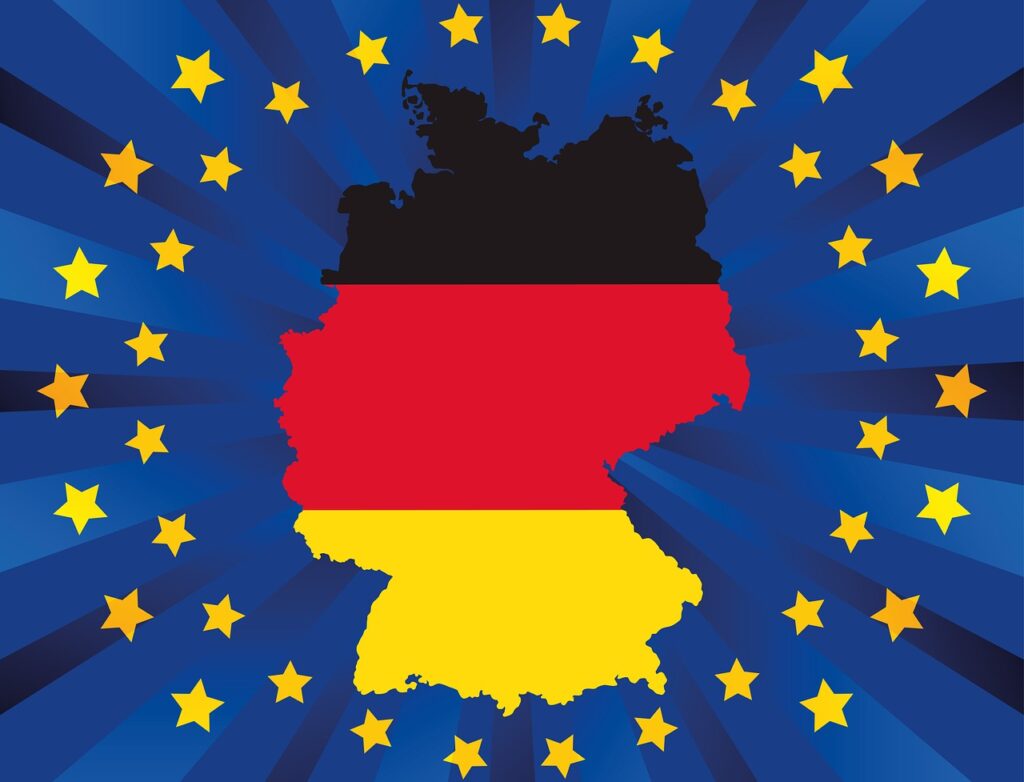
Germany has become the clearest example of how European regulators and courts are dealing with unlicensed gambling operators. What is happening there is not an exception. It is a preview of what will happen across the European Union.
CoinPoker fits exactly into the category of operators that are already losing legal ground.
Germany’s Position Is Clear and Established
German courts have repeatedly ruled that:
- gambling operators must hold a valid German license to accept German players,
- operators without a license act unlawfully,
- gambling contracts with unlicensed operators are void,
- players may reclaim losses incurred with illegal operators.
Importantly, self-exclusion is not required to reclaim losses in Germany. It is sufficient that:
- the player was located in Germany,
- the operator had no German license,
- the operator accepted deposits anyway.
This legal logic has already led to successful claims against online casinos and gambling platforms operating without authorization.
Why Germany Matters for the Entire EU
Germany is not acting in isolation. Its approach is based on principles that are common across the EU:
- consumer protection,
- prevention of illegal gambling,
- enforcement of licensing requirements,
- responsibility of operators toward players.
What Germany has done is apply these principles consistently and decisively. Other EU member states are following the same direction, even if enforcement is currently slower.
The EU Trend Is Moving Against Unlicensed Operators
Across Europe, regulators are increasingly focused on:
- blocking unlicensed platforms,
- imposing fines and enforcement measures,
- supporting player claims against illegal operators,
- strengthening cooperation between regulators.
The idea that an operator can accept EU players without a license and avoid consequences is becoming outdated.
CoinPoker’s model depends on this assumption remaining true. That assumption is no longer realistic.
Why CoinPoker’s Situation Is Worse Than Many Others
CoinPoker does not merely lack a license. It also:
- performs no KYC,
- ignores self-exclusion systems,
- operates with anonymous accounts,
- refuses to provide full transaction records,
- relies entirely on cryptocurrency payments.
Each of these factors increases legal risk. Together, they create a profile that regulators view as particularly problematic.
From a European legal perspective, CoinPoker is not a borderline case. It is a clear one.
Courts Are Shifting the Risk to Operators
One of the most important legal developments in Europe is the shifting of responsibility away from players and onto operators.
Courts increasingly recognize that:
- players cannot be expected to enforce licensing rules,
- operators are professionals and bear compliance obligations,
- operating illegally is a business decision,
- the financial consequences of that decision belong to the operator.
This directly undermines CoinPoker’s position.
The “Offshore” Strategy Is Failing
For years, many gambling platforms relied on offshore registration, crypto payments, and minimal transparency to avoid regulation. European enforcement is now catching up.
Jurisdiction is determined by where the player is, not where the operator claims to be based.
Accepting EU players creates EU legal exposure.
What This Means Going Forward
CoinPoker’s current position in Europe is not sustainable. The legal direction is clear:
- unlicensed operators face increasing enforcement,
- players are becoming more aware of their rights,
- courts are more willing to order refunds,
- regulatory pressure is expanding beyond Germany.
Germany is simply ahead of the curve.